How Many Cards in a Tarot Deck? The Full Breakdown
How many cards in a tarot deck? A standard modern tarot deck has exactly 78 cards: 22 Major Arcana cards and 56 Minor Arcana cards. Learn every group, all four suits, the standard tarot cards in order, and how many cards to draw.
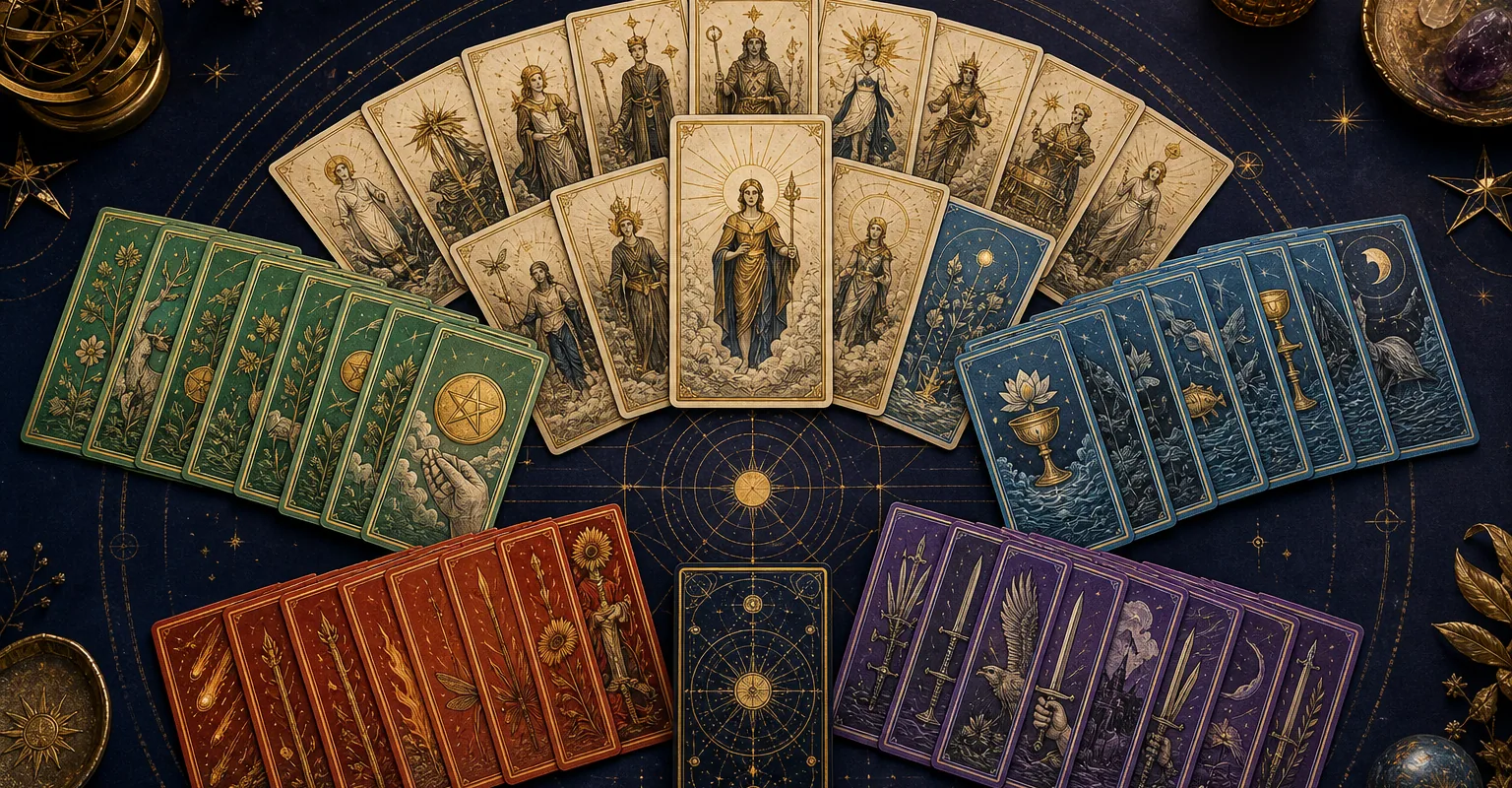
The Four Numbers to Remember: 78, 22, 56, and 4 x 14
These are the four numbers behind a complete tarot deck: 78 cards total, 22 Major Arcana, 56 Minor Arcana, and 4 suits with 14 cards in each suit.
How to Check Whether Your Deck Is Complete
Bought a used deck or found a loose card? Sort it once instead of counting a shuffled stack repeatedly. The images below are designed as full-frame visual checklists for the Major Arcana order and the four 14-card suits.
Separate 22 Major Arcana cards
Put The Fool through The World in numerical order. Strength and Justice may swap numbers in different traditions, but both cards should be present.
Build four piles of 14 Minor Arcana cards
Make one pile each for Cups, Wands, Swords, and Pentacles. Every pile should contain Ace through Ten, then Page, Knight, Queen, and King.
How Many Tarot Cards Are There in Total?
The standard answer is 78. Rider-Waite-Smith, Marseille, Thoth, and most modern tarot decks preserve this count even when their artwork and vocabulary differ.
The Two Main Groups: Major and Minor Arcana
?Arcana? means mysteries or secrets. Major and Minor describe the scale of their symbolic focus, not whether a card is important.
How Many Major Arcana Tarot Cards? 22
There are 22 Major Arcana cards numbered 0 through 21. They portray archetypes, values, choices, turning points, and stages of development. The Fool carries 0, and The World completes the numbered sequence at 21. Several majors in a reading may emphasize an enduring lesson or formative chapter, but one major in a central spread position can matter more than several background cards. Strength and Justice exchange positions VIII and XI in some traditions, yet both remain present and the total remains 22. Explore the 22 major arcana cards for individual meanings.
How Many Minor Arcana Tarot Cards? 56
There are 56 Minor Arcana cards divided into Cups, Wands, Swords, and Pentacles. Each suit contains Ace through Ten plus Page, Knight, Queen, and King. The minors describe relationships, feelings, projects, disagreements, work, health routines, money, home, and practical decisions. Their repeated number-and-rank pattern makes the deck systematic: learn what a Seven or Queen tends to express, then combine that pattern with the suit. Browse the 56 minor arcana cards to see the complete group.
How Major and Minor Arcana Work Together
Both groups answer one question. A Major Arcana card can frame the deeper theme while Minor Arcana cards show where it appears and what action is available. The Chariot may show a need for direction, the Eight of Pentacles the practice required, and the Two of Swords a decision delaying movement. Always consider spread position, question, imagery, and neighboring cards before deciding that a major is automatically stronger.
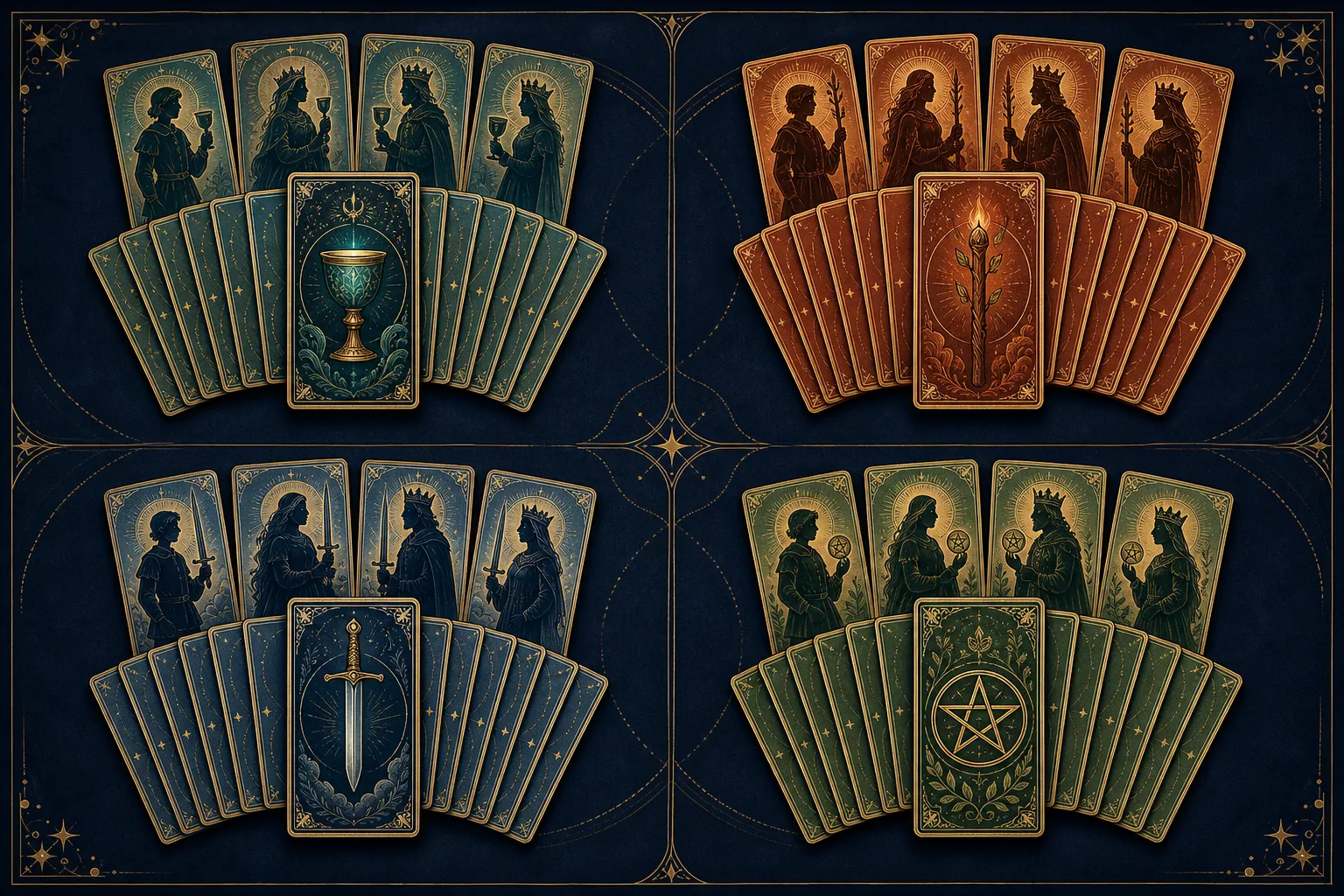
The Four Suits of the Minor Arcana
Each suit contributes 14 cards to the Minor Arcana. Together the four tarot suits cover emotional, energetic, mental, and material experience. The guide image is shown as a full composition so you can compare all four suits at once.
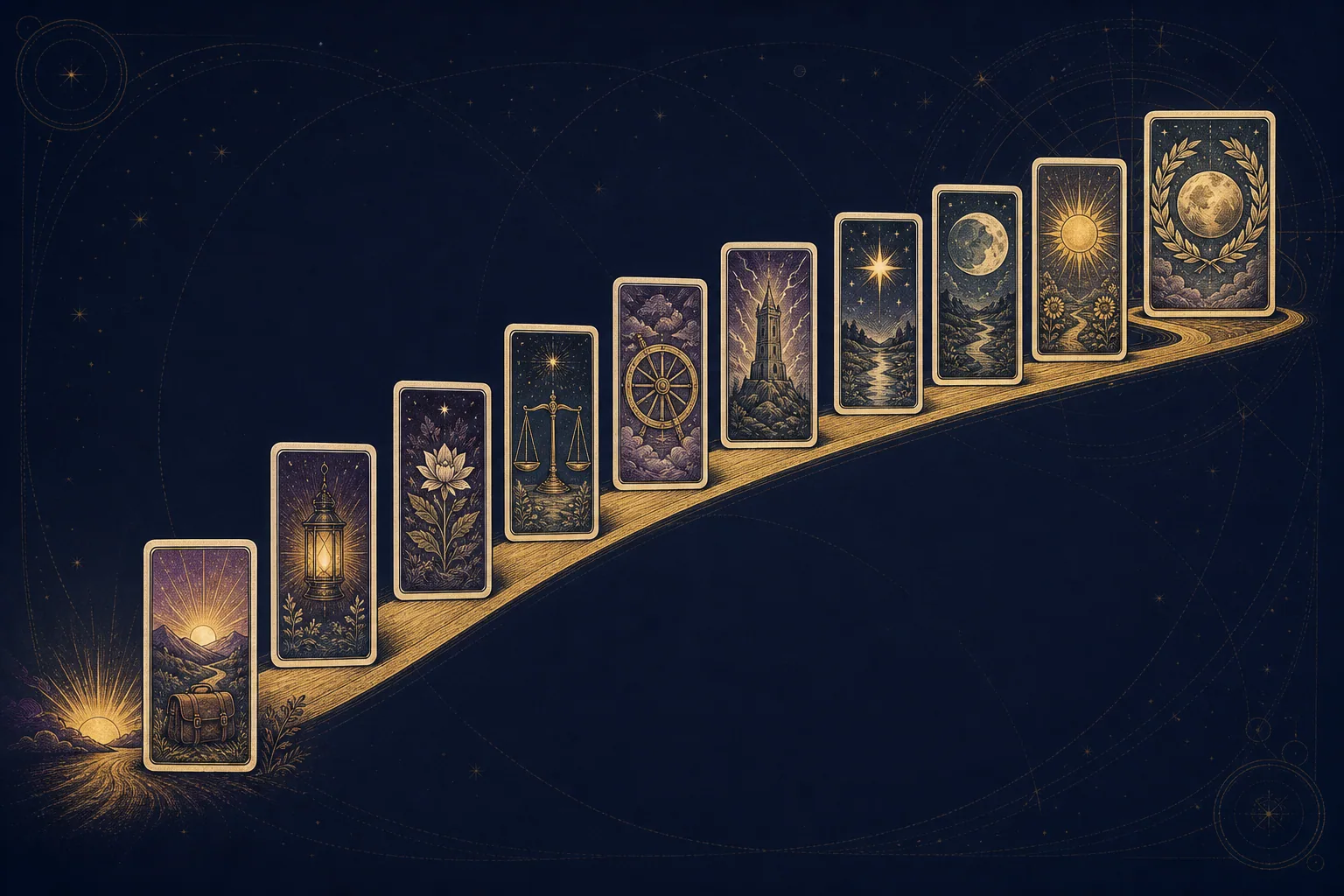
Tarot Cards in Order: The Full Sequence
Most publishers place Major Arcana first and then group the Minor Arcana by suit. The sequence image is shown uncropped so the full order can be understood as one continuous map.
How Many Cards Should You Draw in a Reading?
A full deck has 78 cards, but a spread uses only the number required by its defined positions. More cards add complexity, not automatic accuracy.
How Many Cards to Draw in Tarot for Beginners
Draw one card for a daily focus or one precise prompt. Draw three for a simple progression such as situation, obstacle, and advice. These sizes let beginners observe every image and finish with a coherent summary. Use five cards when each position adds a distinct layer, and save ten-card layouts such as the Celtic Cross until position-based interpretation feels natural. Choose the spread before shuffling and do not add cards only because the first answer feels uncomfortable.
Common Draw Sizes and Their Uses
One card supports a concise check-in. Three cards compare perspectives or show a sequence. Five cards can explore causes, resources, obstacles, advice, and direction. Seven cards may map a week or layered process. Ten cards support broad analysis. A full-deck tableau exists in specialized methods but is not practical for beginners. Match the number to the question and make every position earn its place.
Should Drawn Cards Go Back in the Deck?
Keep drawn cards out until a spread is complete so the same physical card cannot repeat. Between separate readings, return all cards and shuffle the full deck. Reversals change orientation, not quantity. Decide in advance whether cards that jump during shuffling count. Consistent rules prevent a reader from changing the method unconsciously to chase a preferred result.
FAQ About Cards in a Tarot Deck
Direct answers about totals, suits, missing cards, jokers, and draw sizes.
Browse all tarot card meanings or follow the tarot for beginners guide.
Explore All 78 Tarot Cards
Now that you know how many cards are in a tarot deck, browse every Major and Minor Arcana card or draw from the complete deck online.