The Complete Tarot for Beginners Guide
This tarot for beginners guide explains how to read tarot cards step by step, understand the 78-card deck, choose simple spreads, and build interpretations you can trust. Start with curiosity, a notebook, and one clear question.
Educational guidance for reflection and personal growth. Tarot is not a substitute for medical, legal, or financial advice.

Your First Tarot Reading in 10 Minutes
You do not need to memorize 78 cards before you begin. Use this small, repeatable exercise to learn by doing.
1. Ask one useful question
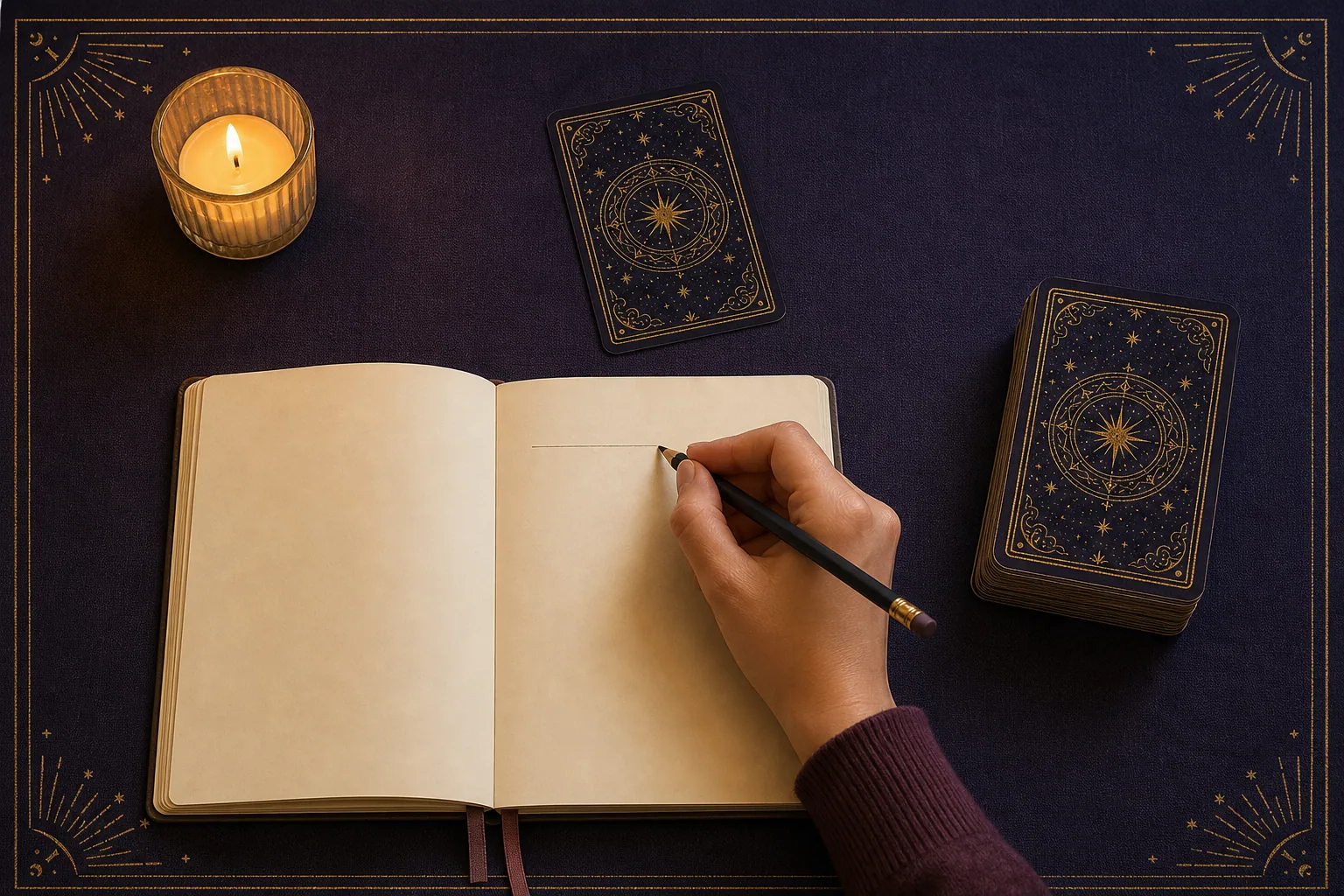
Write an open question that gives you room to act, such as ?What should I pay attention to in this situation today?? Shuffle, draw one card, and spend sixty seconds describing only what you can see before opening a guidebook.
2. Turn the card into one practical sentence
Combine the image, the card?s traditional theme, and your question. Finish with one realistic action or reflection. A useful first reading is not a perfect prediction; it is a clear observation you can test in real life.
What Is Tarot? A Beginner's Introduction
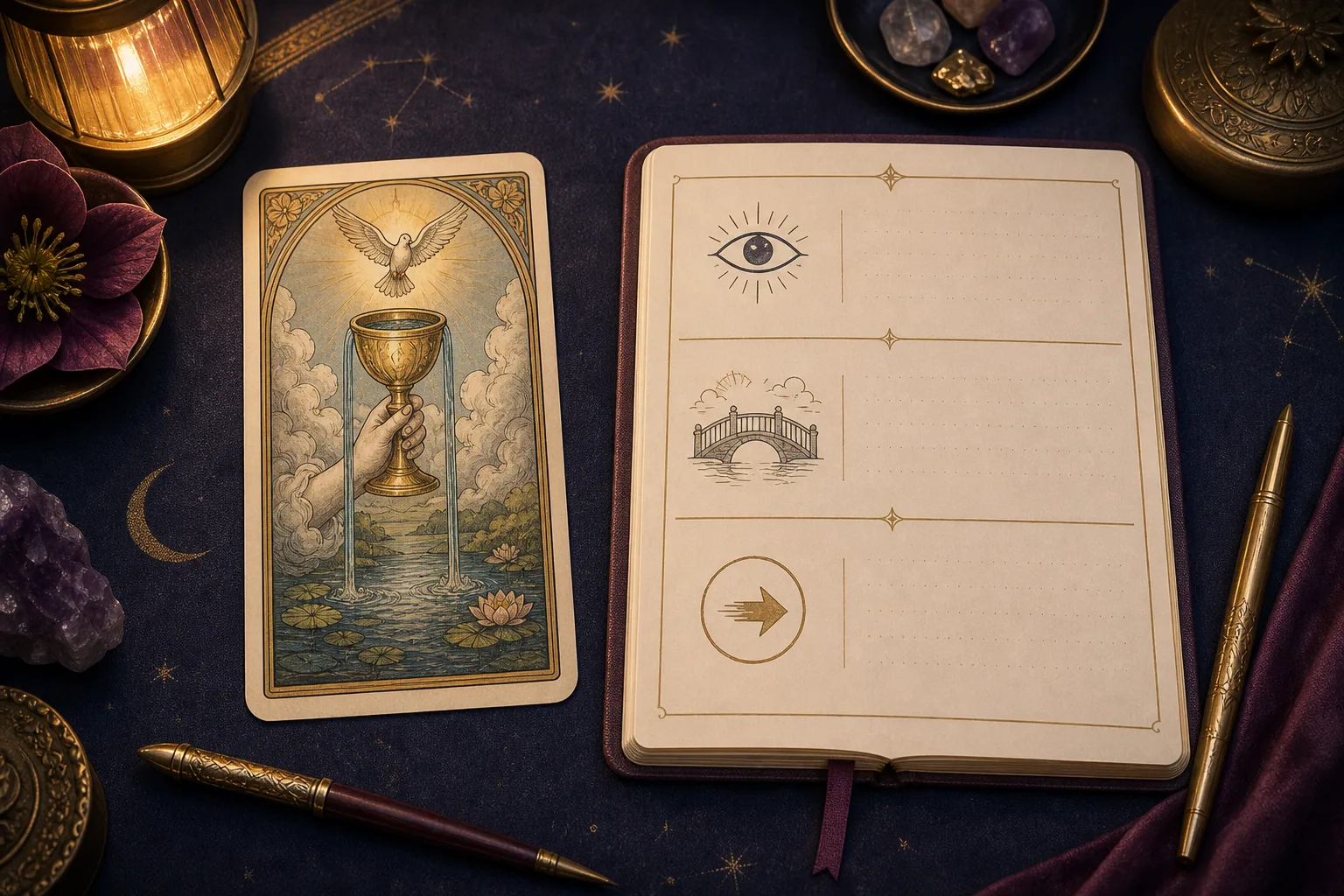
Tarot is a visual language built from 78 cards. A reading combines traditional symbolism, the position of each card, your question, and your own observations. For tarot for beginners, the useful goal is not predicting an unchangeable future. It is learning to notice patterns, name choices, and explore a situation from a fresh angle.
How Do Tarot Cards Work?
Tarot cards work as structured prompts for intuition and reflection. Each image carries established themes, yet its meaning changes with the question, spread position, neighboring cards, and the reader?s honest response. When learning how to read tarot cards, begin with what you see before checking a guidebook: figures, direction, colors, weather, objects, and the emotional tone. Then connect those details to the card?s traditional meaning. This two-part method keeps a reading grounded without turning it into memorization. A card does not force an event to happen. It helps you describe current energy, possible consequences, hidden assumptions, and choices that remain available. Regular practice makes the symbolic language feel familiar, but a clear question and careful interpretation matter more than mystical certainty.
What Are Tarot Cards Used For?
People use tarot cards for journaling, decision support, creative work, relationship reflection, spiritual practice, and daily check-ins. A one-card draw may suggest what deserves attention today; a three-card spread may show a situation, obstacle, and useful response. Tarot for beginners is most constructive when questions invite agency. Ask ?What can I understand about this relationship?? instead of ?Will this person definitely return?? Ask ?What should I consider before changing jobs?? instead of demanding a guaranteed outcome. These open questions produce richer cards and reduce anxious repetition. Tarot can also help you rehearse perspectives: one card may describe your fear, another the facts, and another a practical next step. Treat the result as material for thought rather than an order you must obey.
A Simple Mental Model for Learning Tarot
Think of tarot as a three-layer system. The first layer is card structure: Major Arcana, Minor Arcana, four suits, numbers, and court cards. The second is context: your question and the role assigned to each position. The third is synthesis: the story created when those elements meet. Beginners often jump straight to memorizing seventy-eight definitions, but that hides the system that makes recall easier. Learn broad patterns first, such as Cups relating to emotions and connection, Wands to energy and initiative, Swords to thought and conflict, and Pentacles to resources and practical life. Then individual cards become variations on a familiar grammar. This guide follows that order so every practice session builds reusable understanding.
How to Read Tarot Cards for Beginners
A dependable reading has a beginning, middle, and end: prepare a focused question, draw cards with a defined method, observe before interpreting, connect the cards into one answer, and record what you learned. The process below shows how to use tarot cards without complicated rituals.
Understanding the 78 Tarot Cards
A standard deck contains 22 Major Arcana cards and 56 Minor Arcana cards. Learning this architecture is faster than treating every card as an isolated definition. Explore the all 78 tarot card meanings library whenever you want a detailed reference.
Major Arcana Tarot Cards Explained
The Major Arcana runs from The Fool, numbered 0, through The World, numbered 21. These cards describe large developmental themes: beginnings, choice, responsibility, change, integration, and completion. In a reading, a Major Arcana card often deserves extra attention because it frames the deeper lesson behind everyday events. The Fool can suggest openness and an untested path; The Hermit may point toward deliberate reflection; Death usually represents transition rather than literal death; The World often signals completion and integration. Beginners can study the sequence as a journey in which an inexperienced traveler meets teachers, tests, reversals, and renewal. That narrative makes the cards easier to remember. Browse the major arcana tarot cards for individual upright and reversed meanings.
Minor Arcana Suits and Meanings
The 56 Minor Arcana cards describe the texture of daily life. Cups relate to emotion, relationships, receptivity, and imagination. Wands relate to motivation, creativity, desire, and action. Swords relate to thought, communication, truth, tension, and decisions. Pentacles relate to work, money, health routines, home, skills, and material resources. Each suit contains Ace through Ten plus Page, Knight, Queen, and King. Numbers create shared patterns across suits: Aces begin, Twos balance, Threes develop, Fours stabilize, Fives disrupt, Sixes adjust, Sevens test, Eights move or refine, Nines approach completion, and Tens culminate. Study the minor arcana suits as families, then compare the same number across all four suits.
Court Cards Without Confusion
Court cards can represent a person, a role, a maturity level, or a way of behaving. Pages explore and learn, Knights pursue and test, Queens embody and nurture, and Kings direct and master. Combine that rank with the suit. The Page of Cups might express emotional curiosity or a sensitive message; the Knight of Swords can show fast, forceful thinking; the Queen of Pentacles may describe practical care; the King of Wands can represent confident direction. Do not immediately assign every court card to a specific person. Ask whether it describes you, someone around you, or the approach the situation requires. This flexible method is more reliable than fixed rules about age, appearance, or gender.
Best Tarot Spreads for Beginners
Simple spreads teach interpretation faster because every card has room to speak. The full-frame guide image shows the complete one-card and three-card layouts, so you can see every position before practicing.
How to Learn Tarot Fast
Fast learning comes from short, repeated retrieval and comparison, not marathon memorization. The full-frame study image pairs the 30-day plan with a visible journal workflow so the practice feels concrete.
Common Beginner Mistakes to Avoid
Most early mistakes come from seeking certainty, using questions that remove personal agency, or treating guidebook keywords as complete answers. These corrections keep tarot for beginners practical and emotionally responsible.
Tarot for Beginners FAQ
Short answers to the questions new readers ask most often.
Ready to practice? Open the free online tarot reading or review all 78 tarot card meanings.
Start Your First Tarot Reading Today
Choose one clear question, draw a single card, write what you notice, and compare your interpretation with our card guide. The best way to learn tarot is to begin.